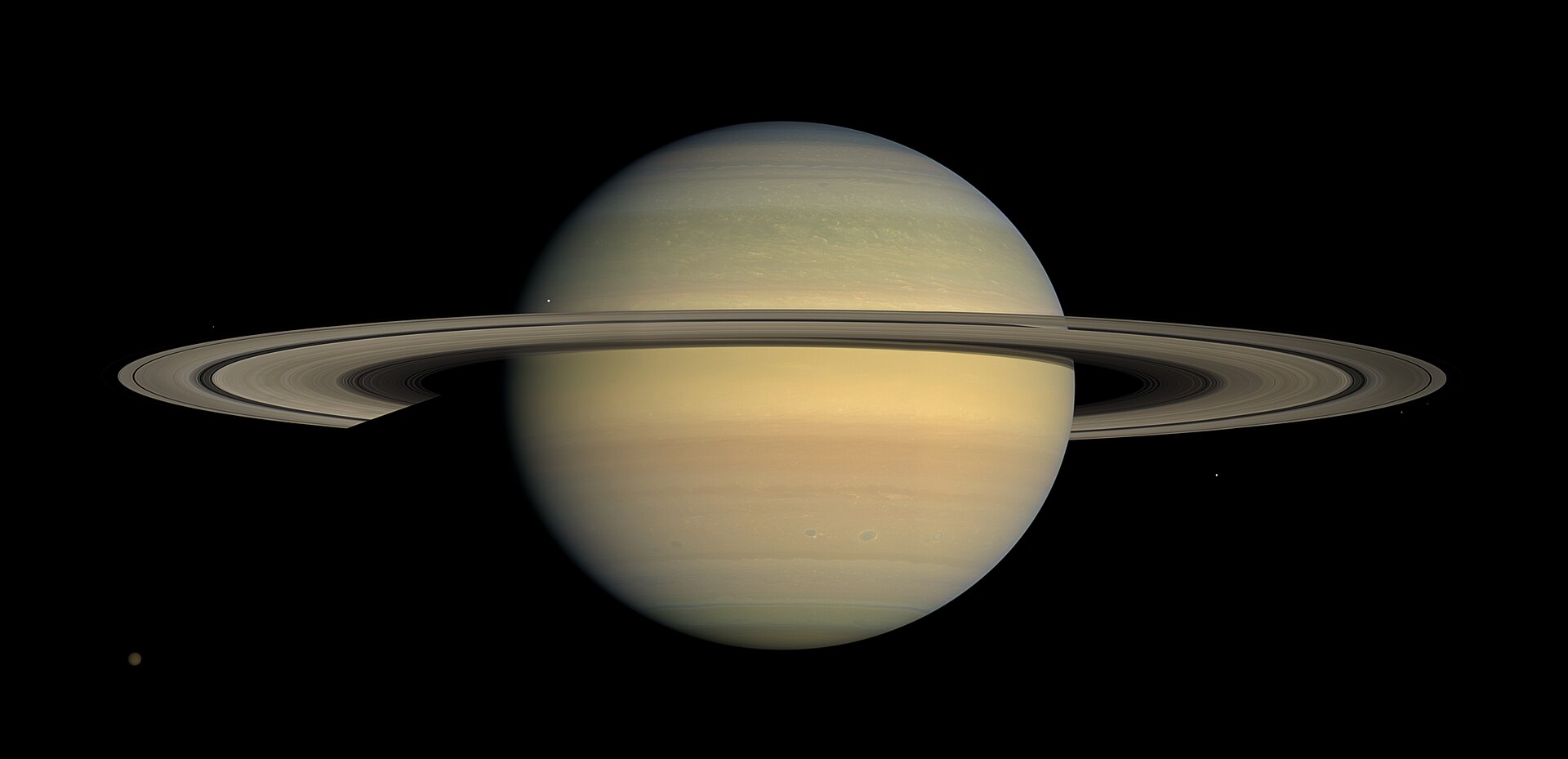
Saturn
NASA/JPL-Caltech/Space Science Institute
Gas giant

Saturn

Saturn anchors the brand because it is one of the Solar System's richest natural laboratories: rings, moons, storms, magnetism, and ocean-world possibilities all in one system.

Object typeGas giant
Diameter116,460 km
Mass95.2 Earth masses
Gravity10.44 m/s²
Average temperatureAbout -140°C cloud tops
Distance from the Sun1.43 billion km
Orbital period29.5 Earth years
Rotation periodAbout 10.7 hours
Number of moons140+
AtmosphereHydrogen, helium, methane, ammonia clouds
DiscoveryKnown since antiquity; rings observed by Galileo in 1610 and explained by Huygens in 1655

Interesting Facts

  • Its rings are mostly water ice.
  • Titan has weather, dunes, rivers, and lakes made from hydrocarbons.
  • Enceladus may have ingredients needed for habitability.

Major Missions

  • Pioneer 11
  • Voyager 1
  • Voyager 2
  • Cassini-Huygens